Hidden away between the cathedral of Lincoln and Newark lies the small village of Norton Disney, home to just a few hundred residents. At first glance it appears to be a typical Lincolnshire parish, complete with a medieval church, quiet lanes, a pub and centuries of history. Yet this unassuming village shares a remarkable link with one of the world’s most famous names: Disney.
For decades, historians and local researchers have explored the connection between the Disney family of Norton Disney and Walt Disney, the visionary animator who created Mickey Mouse and built a global entertainment empire. While a direct ancestral line has still never been conclusively proven, the evidence suggests that the village occupies an important place in the wider Disney story.
The connection begins nearly a thousand years ago. The Disney surname is believed to have evolved from the Norman-French name d’Isigny, originating from Isigny-sur-Mer in Normandy.
Following the Norman Conquest of 1066, members of the d’Isigny family settled in England. Over the centuries their surname gradually changed through various spellings before becoming Disney.
The family became prominent landowners in this part of Lincolnshire, and the village itself eventually adopted their name, becoming Norton Disney. It happened quite a lot in the East Midlands, with many of our villages sharing their name with their rich landowners.
Evidence of the family’s presence remains visible throughout the village. St Peter’s Church contains medieval tombs, memorials and brasses dedicated to members of the Disney family, who served as lords of the manor for centuries. The church is regarded as one of the most significant surviving reminders of the family’s English roots.
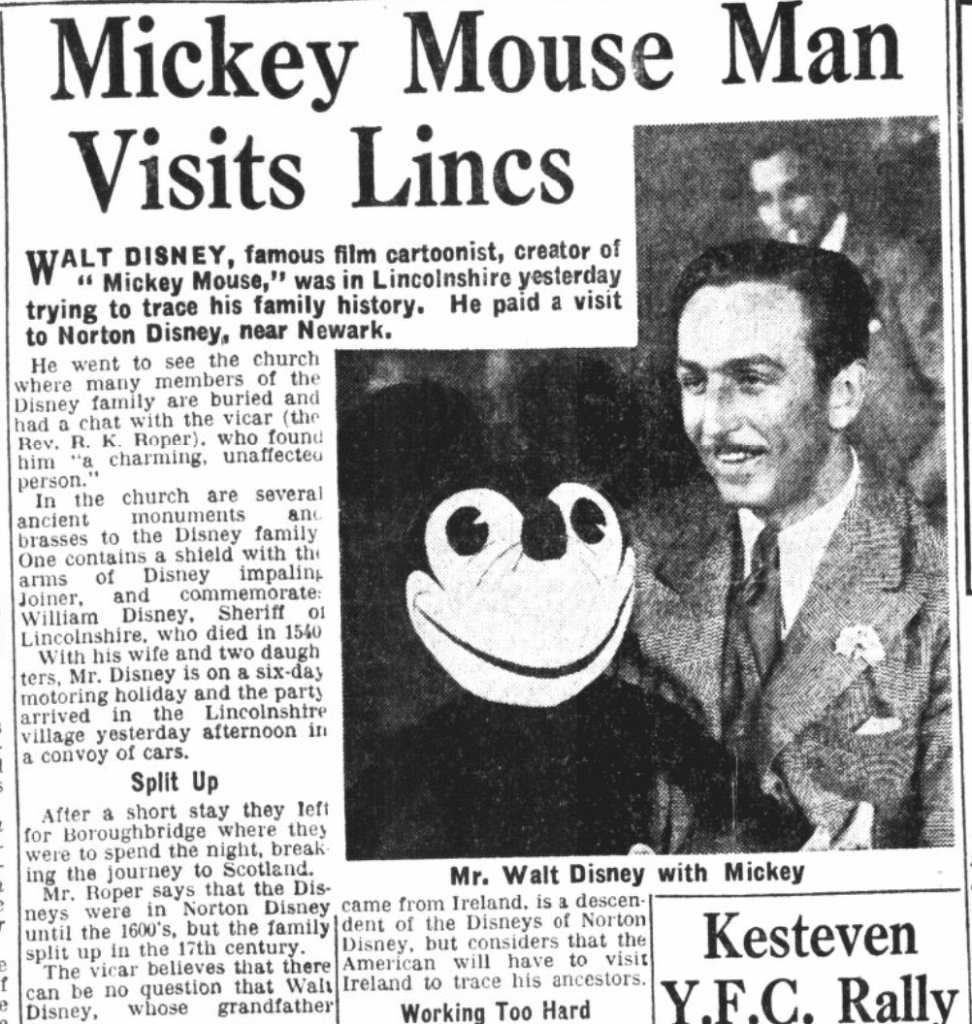
The story took on international significance in 1949, when Walt Disney himself paid a visit to Norton Disney.
At the time, Disney was in Britain during the production of Treasure Island, the studio’s first live-action feature film.
Intrigued by reports of a village bearing his surname, he travelled to Lincolnshire with members of his family to investigate his ancestry. Contemporary accounts described him as being “on the trail of his ancestors.”
During his visit, Disney explored the village and spent time in St Peter’s Church examining the monuments and tombs associated with the Disney family. Photographs and film footage show him visiting local landmarks, studying gravestones and learning about the history of the family name. The visit has since become part of village folklore and remains a source of considerable local pride.
One of the most intriguing aspects of the story involves the Disney family coat of arms. Several memorials in St Peter’s Church feature heraldic symbols including three lions. Local historians have suggested that these emblems may have inspired elements of the modern Disney heraldry and imagery seen on Cinderella Castle in the companies theme parks and idents at the start of their films.
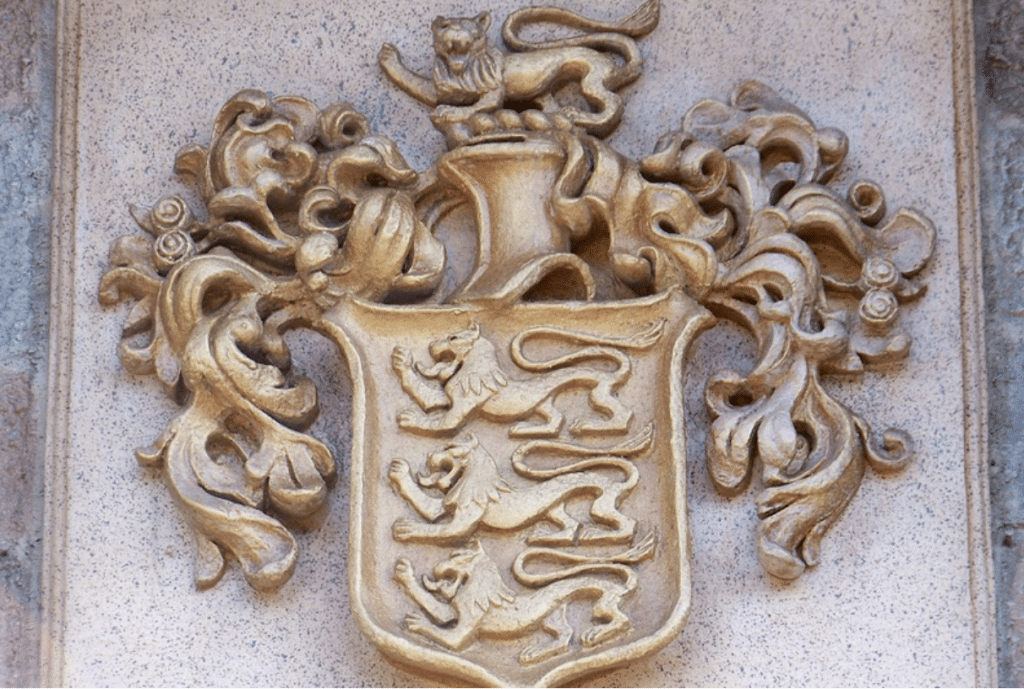
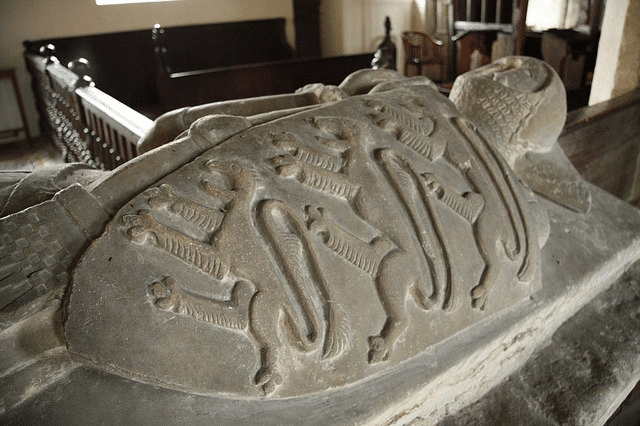
While the idea remains speculative and is not proven, it has become a popular part of the Norton Disney narrative.
In recent years, the connection has received renewed attention. As The Walt Disney Company celebrated its centenary, researchers revisited the story of Walt Disney’s 1949 visit and highlighted the village’s role in the family’s history. North Kesteven District Council has even developed a Disney Connections Trail to help visitors explore the links between the village and one of the world’s most recognisable names.
You can find details of the trail HERE
Whether or not Norton Disney can claim to be the definitive ancestral home of Walt Disney, it undoubtedly provides a fascinating glimpse into the origins of a surname that became synonymous with imagination, storytelling and entertainment.
For visitors standing among the medieval tombs of St Peter’s Church, it is remarkable to think that the roots of a global cultural phenomenon may stretch back to this quiet, tiny corner of Lincolnshire.