In the Peak District, winter doesn’t simply arrive — it settles in.
The moors turn monochrome. The wind sharpens. And the silence becomes a presence of its own, pressing against windows, filling the spaces between thoughts.
In January 1977, Pottery Cottage, a stone house on the edge of Eastmoor, would become the centre of a story that feels less like true crime and more like a psychological thriller.
Taking centre stage is Billy Hughes.
Billy was the kind of man people remembered for the wrong reasons. Not because he was loud or charismatic—he wasn’t—but because something in him felt coiled, like a wire pulled too tight.
Inmates with him in prison before he committed his most infamous crime said they felt a “pressure” around Billy; it was as if the air thickened around him.
So we begin this tragic tale with Hughes being taken from Leicester Prison to Chesterfield Magistrates Court in a taxi. He is about to face charges of stabbing a man in the face and then raping his girlfriend at knifepoint.
He was accompanied by prison officers Donald Sprintall and Kenneth Simmonds on the journey. Hughes was frisked before entering the taxi and then handcuffed to Simmonds and placed in the back seat; Sprintall took the front passenger seat. Their method of handcuffing Hughes meant that, although he was handcuffed to another officer, he still had one hand free.
While on route to Chesterfield, Hughes asked to use the toilets at the Trowell service area in Nottinghamshire.
As a category C prisoner, Billy Hughes had been allowed to work in the prison kitchens and it was here that he had access to knives. He managed to conceal one before embarking on the journey. He then used it to attack both prison officers inside the vehicle after they left the service station.
Huges attacked Sprintall first, stabbing him in the back of the neck and narrowly missing his spine. He then turned his attention to Simmonds, whom he slashed across the jaw and hand.
After incapacitating the prison officers and forcing Sprintall to unlock the handcuffs as he held a knife to his throat, He forced the taxi driver, David Reynolds, to continue driving along the A617 for a short distance before dumping him and the badly injured officers at the roadside and commandeering the vehicle.
The escaped prisoner managed to drive for only a short distance before crashing the car into a wall along the B5057; he then fled on foot onto Beeley Moor. Police discovered the abandoned vehicle close to Chatsworth House approximately one hour later.
His escape had been fast, opportunistic, and devastatingly effective. One moment Hughes was shackled in the back of a taxi; the next, he was a ghost moving through the snowbound countryside.
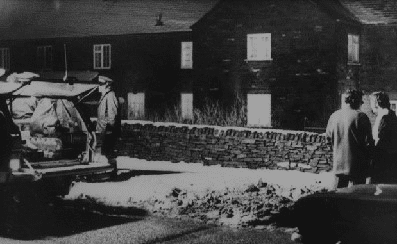
The Peak District swallowed him whole.
Hughes headed north across Beeley Moor for three hours in the driving snow, until he reaches Pottery Cottage.
The unsuspecting family within were about to be subjected to a truly horrifying few days…
The house with the lights still on
Pottery Cottage looked like safety. A warm glow in the windows. Smoke curling from the chimney. A family inside preparing for an ordinary week.
Gillian Moran loved the house. Friends said she described it as “a place where the world couldn’t reach them.” A sanctuary.
But sanctuaries have doors. And doors can open.
When Hughes stepped inside, he didn’t bring chaos. He brought control. A chilling, deliberate stillness.
Outside, snow kept falling, burying the world in white. Inside, time became elastic. Minutes stretched. Hours blurred. The family lived in a suspended reality where the rules were rewritten by a man who believed he could outthink everyone.
Hughes had picked up two axes kept outside for chopping wood before silently creeping into the house, where he found Arthur Minton, a 72-year-old retired grocer and his wife, Amy.
Shortly afterwards, their 38-year-old daughter Gill Moran, returned, to be told there was a man in the house who would kill them unless they complied with his wishes. Gill’s 10-year-old daughter Sarah came home from school, followed by her husband, Richard.
Police officers trudged through the snow, knocking on doors, asking questions. They were close. Agonisingly close. But Pottery Cottage remained quiet, its curtains drawn, its secrets sealed behind its stone walls.
For three days, escaped prisoner Hughes played macabre psychological games with Gill Moran, keeping her family hostage in separate rooms of their home while secretly murdering them one by one.
Hughes had taken a fancy to Gill and was using her to run his errands. He killed her daughter and father the first night, but he told her they were alive so she would do what he said.
On the third night he had tied up her husband and mum, Amy.
Amy had managed to free herself and was about to untie Richard but Hughes discovered them and slashed her throat and before stabbing Richard.
Hughes then dragged Gill to a neighbour’s house, where she asked her neighbour Len Newman to give their car a tow with his pick-up to help get it to start. After he helped them, they fled and he rang the police. Just before they left Gill mouthed ‘help’ and Amy, despite her fatal injuries managed to cry out for help before she died.
He then forced Gillian to drive him toward Chesterfield. The roads were slick, the sky low, and the air inside the car thick with unspoken terror.
A chase with police, who had now been notified, followed. It was fast, icy, and desperate with blue lights slicing through the grey.
When officers finally stopped the car, the confrontation was swift. He was now surrounded by the very people he believed he could outwit.
Peter Howse was Chief Inspector of the Buxton South Sub-division of Derbyshire Police and in an earlier interview shared details about the bloody denouement to this horror story.
“Hughes had been driving from one side of the road to another at fast speeds. It was very hectic,” Howse said.
“These were the worst weather conditions Derbyshire had seen for about 20 years. The roads were blocked. We didn’t have great chances of finding him.
“As he was going towards Cheshire, I called for a road block and another officer put a bus across the road at Rainow.
“He tried to avoid the bus and crashed into a wall.”
Howse ran to the car and Hughes began holding an axe above Gill’s head, threatening to kill her if he didn’t back off.
“This was the first time I had met Hughes but I knew all about his history. He was a psychopath.
“He had followed a young couple in the park. He watched as they engaged in sexual activity behind the swimming baths and then he came upon them. He hit the man with half a brick and dragged the woman to the river bank where he raped her.
“I tried to negotiate for 50 minutes until the fire arms officers came. They had never fired a gun before, but had the correct training.
“I was trying to persuade him to give himself up. He was demanding another car and I thought if we could tempt him into the other car, I would have a better chance of taking him.”
Inspector Howse told Gill to get out the passenger door but she was too terrified and refused to move. Hughes then lost control and screamed at her and at the officer.
“He shouted ‘right, your time is up’ and went for her,” Howse recounted.
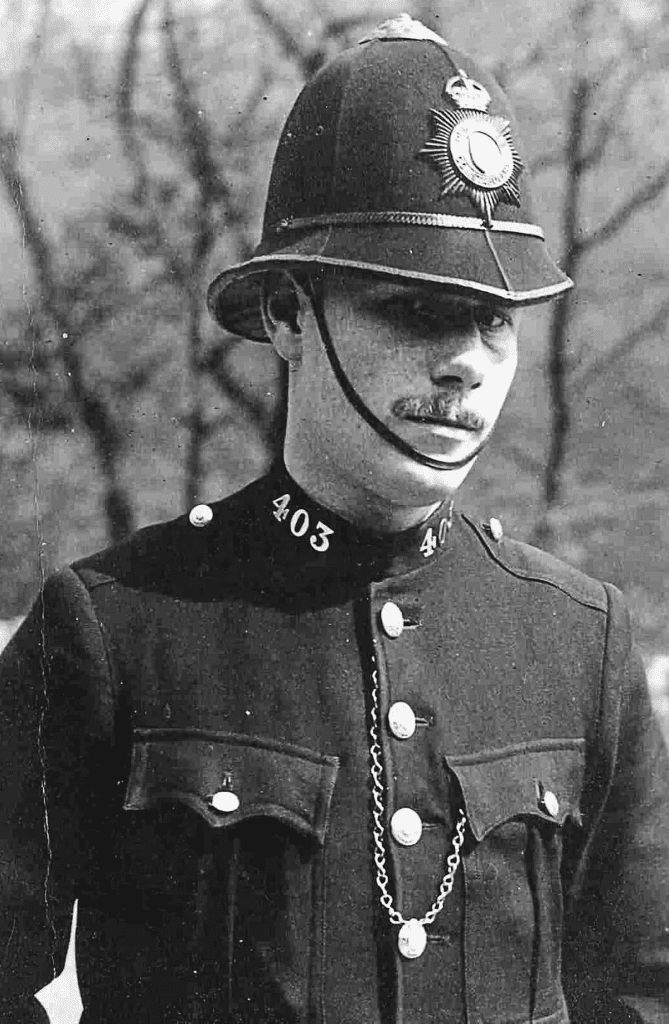
“I tried to stop him and dived through the window of the car. Then one of the firearms officers shot through the back window.
“It hit him in the back of head but amazingly didn’t penetrate his skull – it just bounced off his head and made him more wild as he continued to fight.”
“It took four shots to kill Billy Hughes.
It was PC Alan Nicholls who ran to the side of the door and fired the final shot. It went in at his shoulder but ended up entering his heart and killing him.
He was the first person to be shot dead by Derbyshire Constabulary and the first prison escapee to be shot dead in the United Kingdom in modern times.
Gill ran out of the car and, apart from a graze on her forehead, was physically unharmed.
“Some people say I was either brave or stupid, but I say neither. It was reflex action and that is what we do. I had no time to think – I just had to act. I had to save her life. He had killed four members of her family, so I knew he would kill Gill if he had the chance.”
He was awarded the Queen’s Commendation for Bravery for his actions.
In the aftermath, Eastmoor became a village of whispers. Reporters descended, their vans and cables snaking across the same lanes Hughes had walked days earlier. The cottage itself—once a home—became a symbol too heavy to bear.
Eventually, it was demolished. Not out of disrespect, but out of mercy. Some places absorb too much darkness to ever feel like homes again.
The land where Pottery Cottage stood is quiet now. Grass grows where the walls once were. The wind moves through the space without resistance. But the story lingers, like a cold breath on the back of the neck.