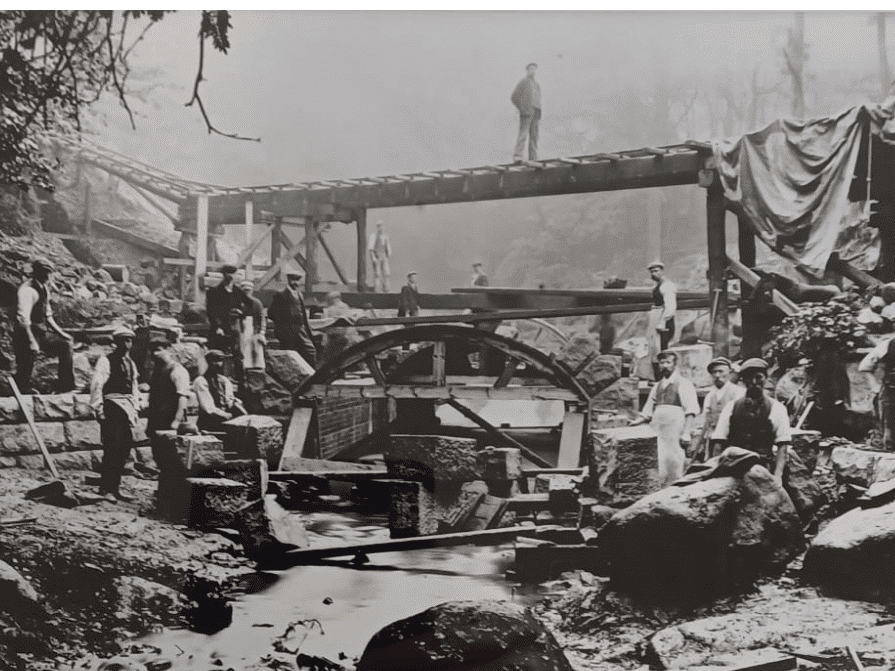
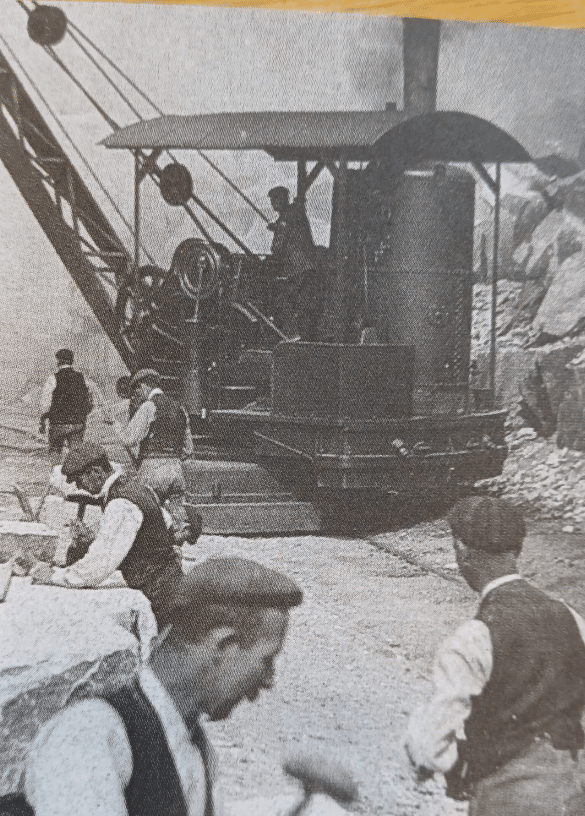
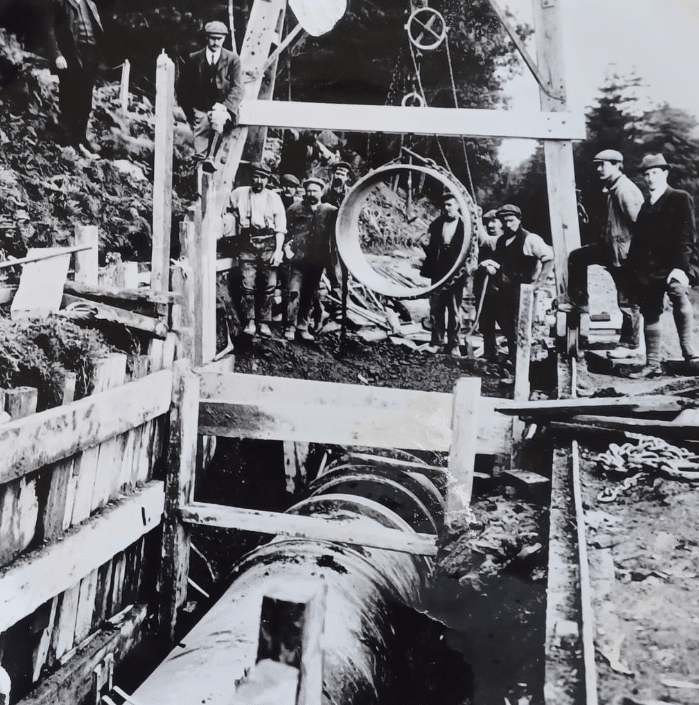
Severn Trent has shared archive images of the original dam‑builders who helped create the famous Derwent Dam in the Peak District more than a century ago – and they show just how intense building it actually was.
The project took a massive 14 years to complete and involved around 1,000 workers, all helping deliver what’s now one of the country’s most important pieces of water infrastructure.
But while Derwent Dam might look calm and scenic now, it plays a huge role behind the scenes.
SIGN UP FOR OUR FREE E-MAIL NEWSLETTER SENT EVERY TUESDAY AND THURSDAY HERE
It’s a key part of the “rain‑to‑tap” journey — a process that takes around 12 hours and involves thousands of Severn Trent staff. The reservoir stores billions of litres of water collected from the Peak District area and even helps naturally improve water quality by allowing time for purification and sedimentation.
From there, water flows on to Bamford treatment works, where it’s treated before finally reaching homes across Derbyshire, Leicestershire and Nottinghamshire — meaning every glass of water has had a bloody long journey.
Plans for the Upper Derwent Valley reservoirs were first drawn up back in 1898 by the then Derby Corporation (a forerunner of Severn Trent). Derwent and Howden reservoirs were part of the original vision, with Ladybower added later in 1945 to complete the trio.
Construction of Derwent Dam itself began in 1902 under chief engineer Edward Sandeman and wasn’t finished until 1916. Enormous stones were quarried at Bole Hill in Grindleford, transported via a specially built railway, and lifted into place using cranes — all of which feature in the newly released photos.
The images also show gangs of cloth‑capped workers tackling everything from tunnels to towers to the dam wall itself. Many lived in temporary housing nearby in Birchinlee, better known as “Tin Town”, which sprang up to house the workforce.
Today, Derwent Reservoir stretches nearly two miles long, covers around 175 acres, and reaches depths of up to 114 feet. It’s surrounded by woodland and wildlife — and attracts visitors from around the world, either for the scenery or to pay tribute to the Dambusters of 617 Squadron.
Speaking about the images, Severn Trent’s visitor engagement manager Donna Marshall said Derwent Dam is “a truly incredible feat of engineering” and that releasing the photos is a fitting way to mark 110 years since its completion.
Water resources lead Doug Clarke added that the dam shows why long‑term investment matters — with generations already benefitting from the work of the original dam‑builders, and many more set to benefit in the future. Especially with the British weather doing whatever it feels like.
These photos show us those dramatic stone walls aren’t just a pretty backdrop — they’re the result of grit, graft and engineering brilliance that’s still quietly doing its job 110 years on.