There are pubs. And then there are pubs.
The sort where you knew which table you’d end up at before you’d even walked through the door. Where somebody was permanently feeding coins into the jukebox, the carpet had seen things it could never repeat, and ordering something more exotic than a pint and a packet of crisps might have raised eyebrows.
Sadly, quite a few of those places have disappeared.
Across the East Midlands, hundreds of pubs have called last orders for the final time. The Lost Pubs Project now catalogues more than 46,000 closed pubs across England, including extensive records for Nottinghamshire, Derbyshire, Leicestershire and Lincolnshire.
Picking the most missed is obviously asking for an argument.
So let’s have one.
We’ve picked one great lost boozer from each of the East Midlands’ four cities.
And yes, we already know you’re going to tell us we’ve picked the wrong one.
NOTTINGHAM: The Narrow Boat
Canal Street
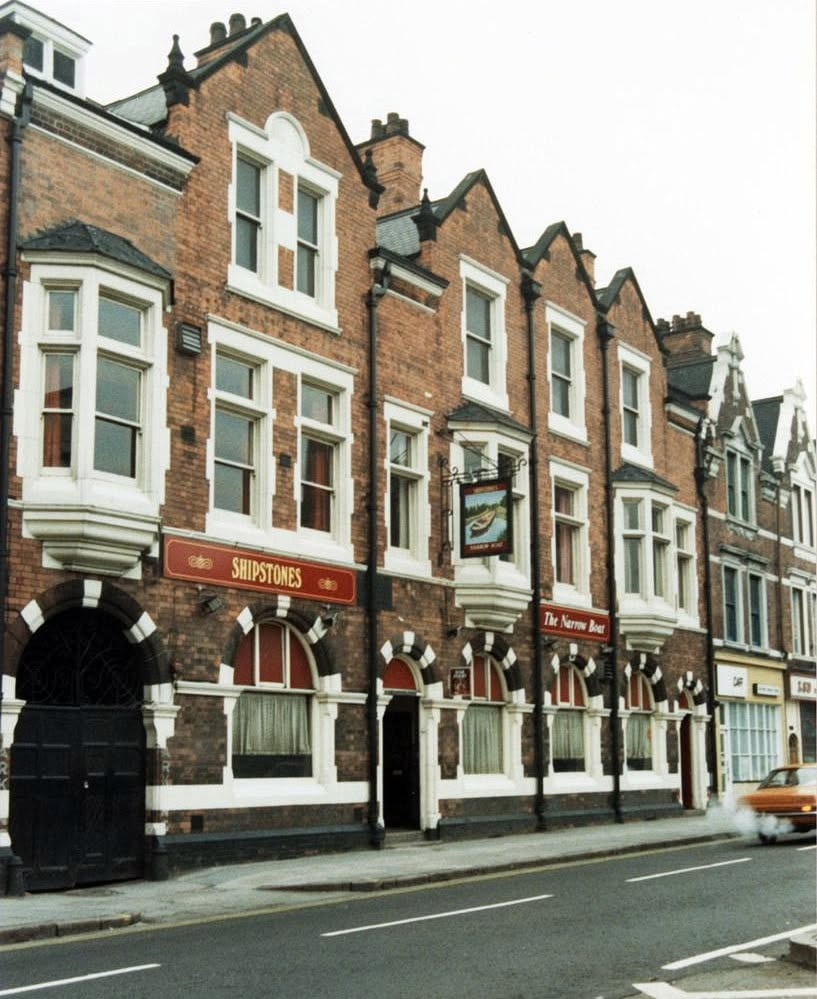
Before the enormous transformation of the Broadmarsh area, Canal Street looked rather different.
And one of the pubs that disappeared from it was The Narrow Boat.
A Shipstones pub close to Broadmarsh, it survived until 1996 before being demolished as the area was redeveloped. An office building subsequently occupied the site.
But pubs aren’t really remembered for buildings. They’re remembered for what people did in them.
And The Narrow Boat appears to have been exactly that kind of place.
One former customer remembered it as having three rooms: a smaller room to the left, the main bar on the right and a pool room at the rear. More importantly for plenty of Nottingham drinkers, he remembered it as a regular stopping point before heading off to watch Forest.
That instantly places it in a Nottingham tradition that will be familiar to generations of football fans: city-centre pint, then off towards the City Ground.
The Shipstones bitter probably helped.
The pub is one of a remarkable collection of disappeared Nottingham watering holes. Local CAMRA chairman Steve Westby has previously lamented the loss of pubs as community hubs, noting that some suburban areas have been left without pubs at all.
The Narrow Boat never made it through the redevelopment.
Nearly three decades later, though, people still remember drinking there.
Bring it back factor: 🍺🍺🍺🍺🍺
DERBY: The Baseball Hotel
Shaftesbury Crescent
You probably don’t need three guesses to work out why The Baseball Hotel was such a Derby institution.
It stood next to the Baseball Ground.
And that meant match day.
The famous old ground was home to Derby County for generations, and the pub on Shaftesbury Crescent became one of those places intrinsically linked with the football ritual around it.
The Baseball Hotel was a Bass tied house with a particularly large bar and was reportedly extremely busy on match days. It eventually closed during the 1990s.
There is something especially sad about losing this sort of pub.
Football grounds aren’t merely buildings, and neither are the pubs surrounding them. Together they create an entire match-day geography.
You knew the route.
You knew the pub.
You knew roughly who would be standing at the bar when you arrived.
Then one day the ground moves, the streets change and another little piece of Saturday afternoon disappears with it.
The Baseball wasn’t alone.
Among Derby’s other departed boozers are the Green Dragon on St Peter’s Street, demolished in the early 1970s; the Corporation Hotel, once famous for its jazz club; Canal Tavern, demolished for the Eagle Centre development; and the Albert Vaults, lost during major demolition in the West End.
But for pure Derby nostalgia, a packed Baseball Hotel on match day takes some beating.
Bring it back factor: 🍺🍺🍺🍺🍺
LEICESTER: The Magazine
Newarke Street
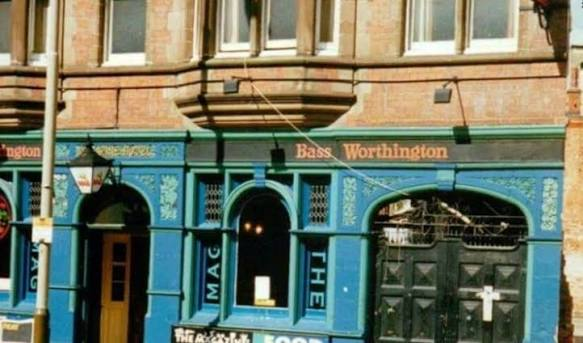
Now this one sounds like it was properly interesting.
The Magazine Hotel on Newarke Street wasn’t just somewhere to drink.
It became part pub, part music venue, part alternative Leicester institution.
The site’s pub history can be traced back beyond 1841 and its name came from the nearby military magazine. During its long existence, clubs and lodges met there and an attempt was even made to establish a music hall at the rear in the 1880s.
But it’s the pub’s later incarnation that many Leicester people may remember best.
During the late 1980s and 1990s, The Magazine developed a distinctly alternative character.
There was poetry.
There was jazz.
There was live music.
There were alternative arts.
There was a punky atmosphere.
And, apparently, just about every variety of Leicester character imaginable wandered through its doors.
The excellent Leicester Pub History Project describes it as welcoming despite the punk feel and recalls a place that simply had atmosphere. It was also one of the city’s pubs known for serving Draught Bass. [pubhistory…ject.co.uk]
Basically, the sort of pub that’s becoming increasingly difficult to manufacture.
You can’t commission “character”.
You can’t get an interior designer to install 30 years’ worth of strange nights out.
The end was looming by 1995, and the old pub was eventually completely demolished in 1999.
Leicester has lost a staggering assortment of other city-centre pubs too. Records include the Black Boy, Churchgate Tavern, Criterion, Bohemian, Cask & Bottle and dozens more.
But The Magazine gets our vote because places where music, oddballs, artists, drinkers and counterculture happily collide tend to be the ones cities miss most when they’re gone.
Bring it back factor: 🍺🍺🍺🍺🍺
LINCOLN: The Duke of Wellington
Broadgate
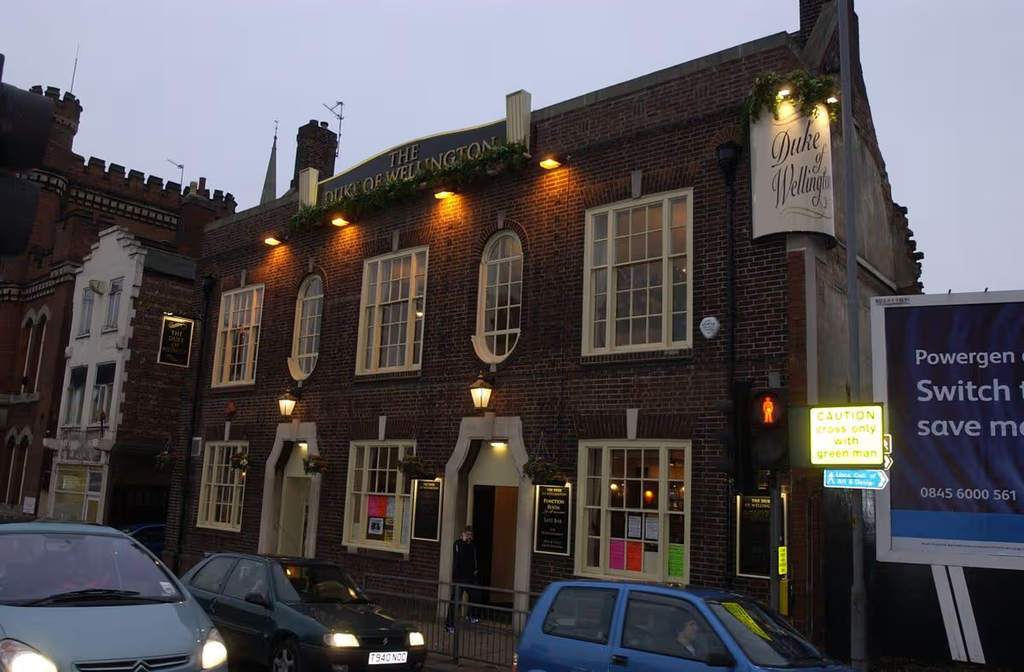
If you saw a band at The Duke of Wellington, there’s a reasonable chance you’ve got a story about the place.
“The Duke”, as it was known, was more than another city boozer.
It became one of Lincoln’s important grassroots live music venues.
And its roll call wasn’t bad.
The Broadgate pub hosted Pulp and The Killers, while its musical history also included the likes of punk and alternative acts. Concert records document performances there by Chumbawamba, Subhumans and Architects.
During the 1980s it was particularly popular, with live music alongside active pool and darts teams.
In other words, this was exactly what a great city pub could be.
Local.
Slightly scruffy.
Social.
And a place where you might see a band for a few quid before anybody outside the city had heard of them.
The Duke eventually closed in 2011. The building survived, however, and was later converted into offices after being bought by Lincoln-based Optima Graphic Design Consultants. The conversion even repurposed elements of the old pub, including plans to turn the original bar into a reception desk.
Lincoln has, of course, lost pubs for centuries.
The city’s disappeared watering holes include the Bulls Head Hotel at Silver Street and Clasketgate, demolished in 1957/58, and the City Hotel near Cornhill, which vanished amid redevelopment in 1973.
But The Duke belongs to a much more recent collective memory.
There will still be thousands of people who don’t just remember the building.
They remember nights there.
And that’s what makes a genuinely missed pub.
Bring it back factor: 🍺🍺🍺🍺🍺
Okay, East Midlands: what have we got wrong?
This is where you come in.
If you could reopen one lost pub anywhere in Nottingham, Derby, Leicester or Lincoln tomorrow, which would it be?
And more importantly…
what made it brilliant?
Tell us the pub, the city and your best memory of it.
Because we’ve got a feeling there are enough vanished East Midlands boozers for a Part Two, Part Three and probably Part 27.
Tell us on our Facebook page HERE